
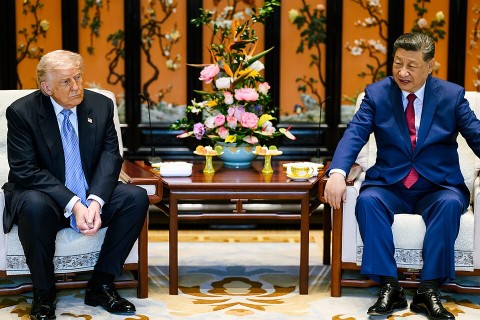
China has issued a caution to the United States to manage Taiwan-related matters with care following remarks by former U.S. President Donald Trump about his intention to converse with Taiwan’s leader, Lai Ching-te. This potential dialogue is particularly delicate for Beijing, which views Taiwan as a part of its territory and disapproves of any foreign engagements with the island’s leadership.
The sensitivity stems from China’s stance that Taiwan is a breakaway province that should eventually reunify with the mainland, using force if necessary. The Chinese government is firmly against any international actions that treat Taiwan as an independent entity and frequently voices opposition to high-level diplomatic interactions with Taipei. Chinese officials have stated that such moves send inappropriate signals to those advocating for Taiwan’s independence and constitute interference in China’s internal matters.
In recent years, tensions surrounding Taiwan have escalated. Notably, in 2022, China conducted significant military exercises around Taiwan in response to a visit from a senior U.S. official. Additionally, Beijing has consistently reacted strongly to U.S. arms sales and political backing for Taiwan. Meanwhile, Taiwan maintains it is a self-governing democracy known officially as the Republic of China, where its government refutes Beijing’s claims of sovereignty and asserts its people’s right to elect their leaders and engage in international diplomacy.
The United States adheres to the “One China” policy, officially recognizing Beijing while maintaining informal relations with Taiwan. The U.S. also provides Taiwan with defensive weaponry under the Taiwan Relations Act. In 2016, Trump spoke directly with former Taiwan President Tsai Ing-wen, an unusual exchange that drew criticism from China. Any forthcoming conversation between Trump and Lai could exacerbate the already strained U.S.-China relations and potentially provoke further Chinese military maneuvers near Taiwan.