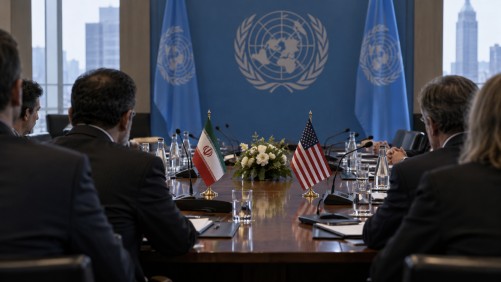
In a significant diplomatic engagement, Iranian officials met with U.S. special envoy Steve Witkoff for three hours of talks on the sidelines of the United Nations General Assembly in New York, as confirmed by President Donald Trump. The discussions, facilitated by Qatari diplomats, involved Iranian Foreign Minister Abbas Araghchi and were characterized as positive by Witkoff, with the potential for further meetings in the near future.
The talks centered around the possibility of Iran reopening the Strait of Hormuz within a week, contingent on the United States taking reciprocal actions to alleviate military and economic pressures on Tehran. A senior Iranian official indicated that Iran is seeking tangible signs from Washington to resume negotiations, which would include easing military operations and restrictions related to the strategic waterway. In exchange for such gestures, Iran expressed willingness to reopen the strait and engage in dialogue.
The Strait of Hormuz is a critical passage for global oil shipments, and its closure has intensified pressure on international energy markets. The potential reopening of the strait could alleviate some of these pressures, provided the U.S. and Iran can navigate the complex negotiations ahead.
Despite these diplomatic overtures, divisions persist within Iran regarding negotiations with the U.S. While some officials are open to talks, others, particularly those linked to the Islamic Revolutionary Guard Corps, have contested reports suggesting a shift in Tehran’s negotiating stance.
During his address at the UN, President Trump highlighted the ongoing choice facing his administration: reaching an agreement with Iran or escalating actions against the nation. He reaffirmed the U.S. commitment to preventing Iran from developing nuclear weapons, underscoring the continued tensions between the two countries.