
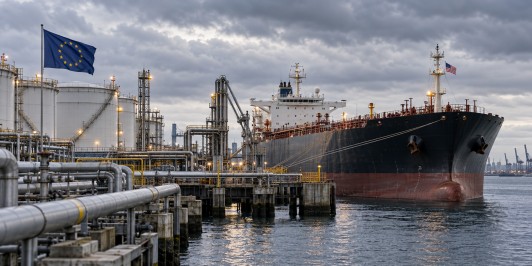
The European Union has raised alarms over U.S. President Donald Trump’s potential plan to impose a 90-day ban on diesel exports. EU officials warn that such a move could exacerbate fuel price pressures both in the United States and across European markets. The proposed measure aims to increase domestic diesel availability in the U.S. to alleviate record-high pump prices, but experts caution that it might lead to tighter global diesel supplies and elevated prices.
Europe’s dependency on U.S. diesel imports has grown as fuel supplies from the Middle East and Russia have dwindled due to disruptions in refining capacity. Consequently, any restriction on U.S. exports could significantly affect the European market. The European Commission has emphasized the importance of dialogue between trading partners to prevent potential disruptions in shared fuel markets.
Although European refineries currently produce a substantial portion of the region’s diesel consumption, and strategic reserves offer a buffer, the loss of U.S. diesel could force European buyers to seek alternative sources from the Middle East and India. This would increase competition and potentially drive up prices. The UK, in particular, might face added challenges due to its reliance on imported refined fuel and limited domestic refining capacity, impacting sectors such as agriculture and transportation.
Diesel prices have already surged across several European countries amid ongoing disruptions in Gulf and Russian refineries. Should the U.S. proceed with the export ban, the global market could face further tightening, intensifying competition for available supplies.
While the U.S. proposal is driven by domestic concerns, its ramifications could extend beyond American borders, potentially straining European and international diesel markets. The EU stresses the need for careful consideration of such measures, highlighting the interconnected nature of global fuel markets.