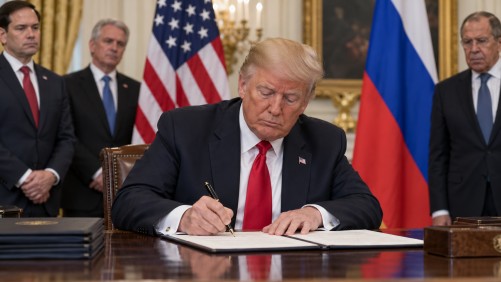
U.S. President Donald Trump has waived key sanctions and tariffs targeting Russia, a move that suspends measures set to take effect under the Lindsey O. Graham Sanctioning Russia and Iran Act of 2026. Announced in an executive order on Friday, Trump stated that the waiver serves the national interests of the United States.
The legislation aimed to increase economic pressure on Moscow due to its invasion of Ukraine, authorizing tariffs of up to 100% on imports from major buyers of Russian oil and natural gas. It also included penalties for countries aiding Russia in evading existing sanctions. With the waiver in place, these measures are paused until Trump or other authorized officials decide further action is necessary. The law permits the president to suspend such measures by notifying Congress, citing national interest.
Trump’s decision has sparked criticism amid growing disapproval of his approach to Russia and Ukraine, with his administration facing scrutiny over its warmer relations with Moscow and public disagreements with Ukrainian President Volodymyr Zelenskyy. Democratic lawmakers have expressed concerns that the waiver undermines efforts to hold Russia accountable for its actions in Ukraine, potentially weakening restrictions on Moscow’s energy revenues and market access.
Furthermore, the proposed sanctions had raised alarm in countries such as China and India, major purchasers of Russian oil, which were wary of the potential impact on international trade and bilateral relations. The suspension of these measures leaves uncertainty about when or if they will be implemented, as the U.S. navigates the balance between pressuring Russia and addressing concerns over energy costs and international economic ties.
This decision follows controversy over a separate diesel supply agreement involving Russia, which Trump defended as a strategy to boost fuel supplies and ease global energy prices. Critics, however, have questioned whether such agreements might inadvertently provide additional revenue to Moscow.