
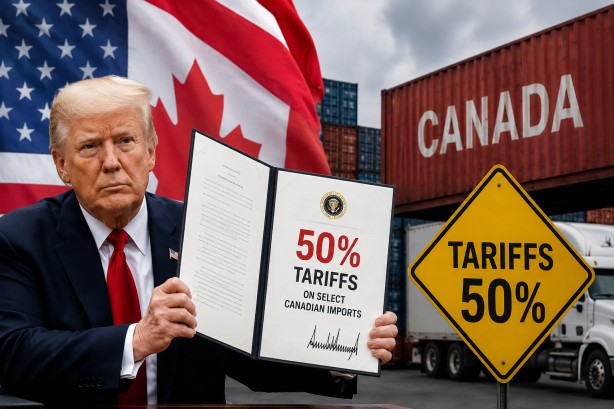
President Donald Trump has initiated a new set of tariffs, imposing 50% duties on certain Canadian imports. This decision comes as a response to what Trump perceives as unfair treatment of American products by Canada. The tariffs focus on goods such as automotive materials, dairy products, and alcoholic beverages, and have been implemented through executive orders while trade discussions under the United States-Mexico-Canada Agreement (USMCA) are ongoing.
The Trump administration justifies these tariffs as a necessary measure to counteract what they see as discriminatory trade practices that are negatively impacting U.S. industries. By targeting specific sectors, the administration aims to address imbalances and advocate for fairer trade conditions for American businesses.
This move by the U.S. government is likely to intensify the ongoing trade negotiations between Washington and Ottawa. As the two countries navigate these discussions, the imposed tariffs add another layer of complexity, potentially influencing the dynamics of market access and economic relations between the neighbors.
The introduction of these tariffs is poised to further strain the economic ties between the United States and Canada. Businesses and exporters are closely monitoring the situation, anticipating Canada’s reaction and assessing the potential consequences for North American trade. The development highlights the fragile nature of international trade relationships and the significant impact policy decisions can have on cross-border economic activity.