
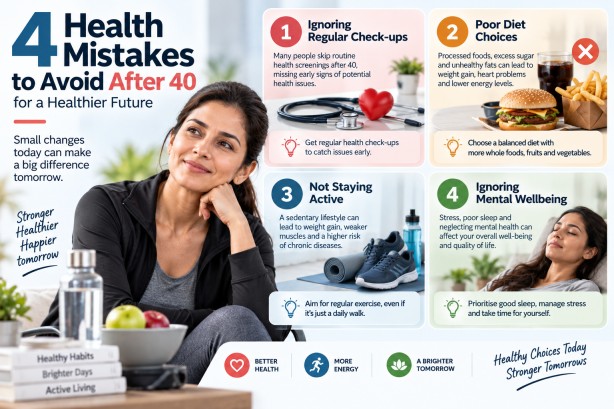
Reaching the age of 40 often prompts a reassessment of personal health practices. The natural shifts in metabolism, muscle mass, and activity levels, combined with increasing daily responsibilities, make it easy to overlook crucial health habits. Instead of waiting for health issues to arise, adopting sustainable routines and sticking to preventive care can enhance long-term wellbeing. Here are some common mistakes to avoid after hitting this milestone.
Firstly, it’s important to steer clear of extreme or fad diets. While these diets might promise quick weight loss, their restrictive nature often makes them unsustainable in the long run. Eliminating entire food groups can also lead to deficiencies in essential proteins, fibers, vitamins, and minerals. A more balanced approach, incorporating fruits, vegetables, whole grains, protein sources, and healthy fats, proves to be more beneficial than temporary dietary restrictions.
Another pitfall is becoming too sedentary, often due to demanding work schedules that involve long hours of sitting. As one ages, maintaining muscle strength is crucial, underscoring the importance of regular physical activity. Incorporating aerobic exercises like walking along with strength training can be highly effective. Simple changes, such as taking short movement breaks during the day or opting for stairs, can significantly mitigate prolonged inactivity.
Additionally, overlooking recommended health screenings is a common mistake. Preventive healthcare is vital, even if one feels healthy, as some conditions can develop without obvious symptoms. Depending on factors such as age, sex, family history, and individual risk, healthcare professionals may suggest screenings for certain cancers, high blood pressure, diabetes, and high cholesterol. Rather than adhering to a universal screening schedule, it’s advisable to discuss appropriate tests and their frequency with a healthcare provider.
Lastly, believing it’s too late to change unhealthy habits can be a significant barrier to health improvement. However, it is never too late to make positive changes. Starting with achievable goals, such as regular walking, improving diet, enhancing sleep quality, reducing tobacco or alcohol intake, or beginning strength training, can lead to healthier routines. Instead of attempting an overnight transformation, focus on small, consistent changes that are more likely to become lasting habits. Embracing your 40s as an opportunity to fortify healthy practices, rather than resigning to the ageing process, can facilitate better wellbeing for years to come.