
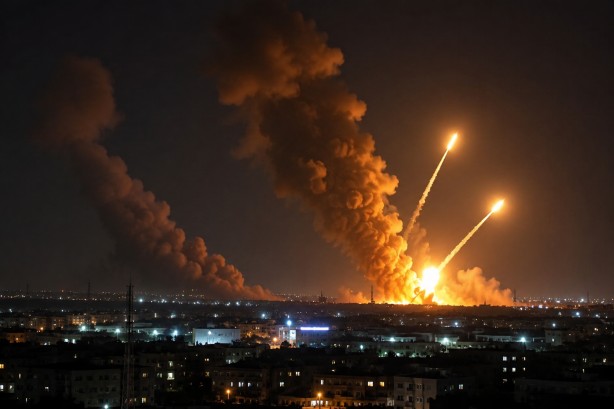
The United States has renewed military strikes against Iranian targets, escalating tensions and raising concerns of a broader conflict in the Middle East. This aggressive move follows a brief pause in hostilities and comes in response to Iran’s attack on a U.S. military base in Jordan that accommodates American troops. President Donald Trump had previously warned of a strong U.S. reaction to any further provocations from Tehran.
In a coordinated operation, U.S. forces targeted multiple sites associated with Iran’s Revolutionary Guard Corps over a two-hour period. According to the U.S. Central Command, the strikes hit military command centers, missile and drone facilities, as well as coastal defense and surveillance sites. Iranian officials confirmed explosions occurred on Qeshm Island near the strategic Strait of Hormuz and in Khuzestan province, with reports from state media indicating that at least two individuals sustained injuries.
The latest military actions mark an intensification of earlier U.S. strikes on Iran-backed militias in Iraq, which reportedly resulted in the deaths of several fighters and Iranian advisers. The escalation has heightened international concerns about the possibility of the conflict spreading further across the region. Efforts by global mediators to revive diplomatic negotiations between Washington and Tehran remain stalled, adding to the uncertainty.
As the situation develops, global energy markets are feeling the impact of these renewed tensions. Brent crude oil prices have surged by over 7%, driven by fears of potential disruptions to oil supplies through crucial Middle East shipping routes. The volatility in the oil market underscores the broader economic implications that could arise from the ongoing conflict.