
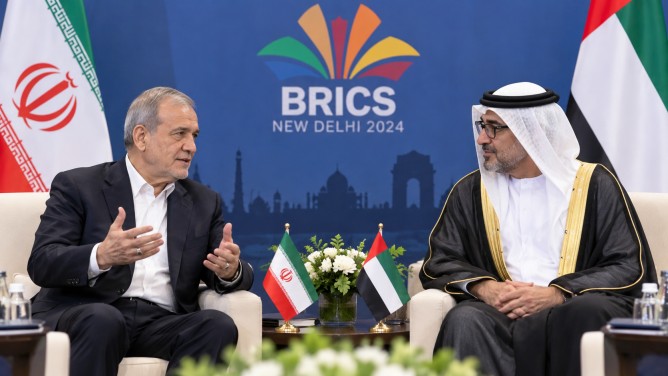
Iran and the United Arab Emirates (UAE) are taking steps to mend their relationship, as noted by Iranian President Masoud Pezeshkian following his recent meeting with Abu Dhabi Crown Prince Khaled bin Mohamed. The dialogue, which took place on the sidelines of the BRICS Summit in New Delhi, was described by Pezeshkian as constructive, with both nations agreeing to leave previous disputes behind and focus on future collaboration. This development is part of a broader trend in the region, where countries are seeking enhanced cooperation on security issues and shipping routes amidst ongoing tensions.
Looking ahead, Iranian officials are set to engage in talks with representatives from Gulf countries and Iraq in Oman on September 14. The agenda will center on regional security and the vital Strait of Hormuz, aiming to foster better understanding and collective security among neighboring countries. Notably absent from the meeting will be Bahrain, which has opted not to participate.
During the BRICS Summit, President Pezeshkian also emphasized the need for stronger economic ties among BRICS member states. He advocated for increased use of national currencies in trade and the development of improved financial mechanisms, suggesting that reliance on current global financial and trade systems has exposed emerging economies to undue political and economic pressures.
In his address, Pezeshkian urged BRICS nations to enhance their economic resilience and foster cooperation, particularly in opposing unilateral sanctions and any attacks on civilian infrastructure. Highlighting Iran’s strategic position, energy resources, and transit networks, he pointed to the country’s potential role in developing trade and energy corridors linking BRICS economies.
These diplomatic initiatives and economic proposals emerge against a backdrop of heightened tensions in the Strait of Hormuz. The emphasis on regional dialogue and cooperation underscores the critical importance of securing global energy supplies and maintaining regional stability.