
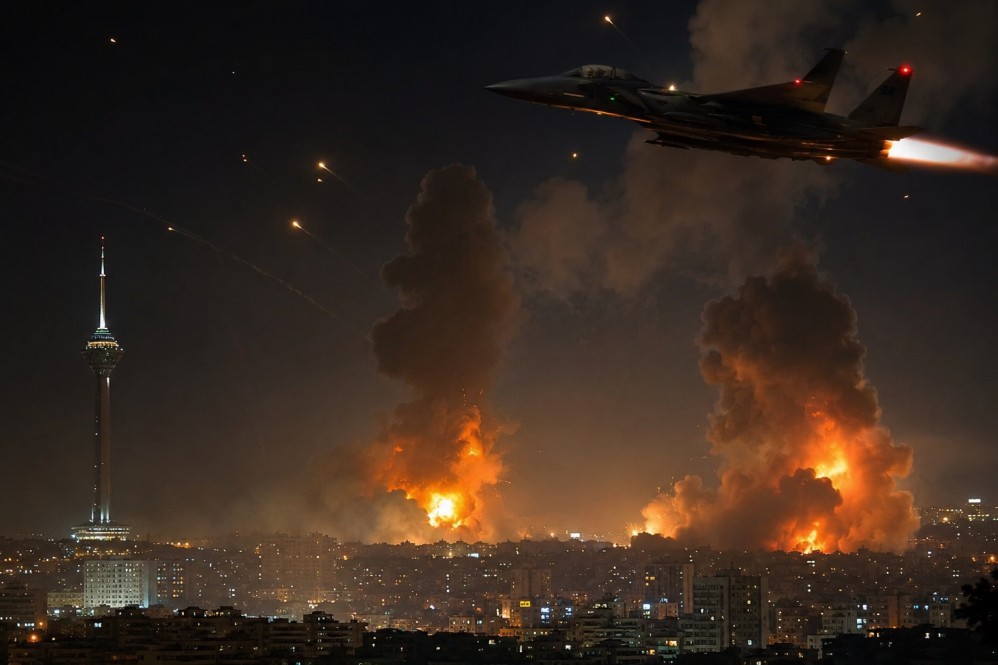
The United States has escalated its military actions against Iran with a third night of airstrikes, as President Donald Trump unveils plans for a maritime blockade of the country. The blockade includes a new 20% tariff on cargo navigating the Strait of Hormuz under the watch of US-controlled security forces. These measures are part of a broader strategy to diminish Iran’s military strength and protect commercial shipping and civilians in this vital maritime corridor, according to the US Central Command.
President Trump emphasized the ongoing nature of military operations targeting Iran and declared the US’s commitment to maintaining security control over the Strait of Hormuz. This move comes on the heels of incidents involving two UAE oil tankers reportedly struck by Iranian cruise missiles in Omani waters, resulting in the death of an Indian crew member and injuries to several others. The heightened tensions have caused Brent crude oil prices to soar nearly 8%, underscoring escalating worries about global energy supply stability.
Iran has strongly criticized the US’s proposed blockade, accusing Washington of jeopardizing international energy security. Iranian officials warned that any efforts to limit its maritime access would be met with a robust response. Meanwhile, international maritime authorities have highlighted that imposing transit fees in international waterways lacks a legal foundation under the current framework of international law.
This latest military confrontation has sparked fears of a broader regional conflict. The ongoing attacks have disrupted shipping activities, driven up oil prices, and added layers of uncertainty to the global economy. With the potential for further escalation, both regional stability and international economic conditions remain in a precarious balance.