
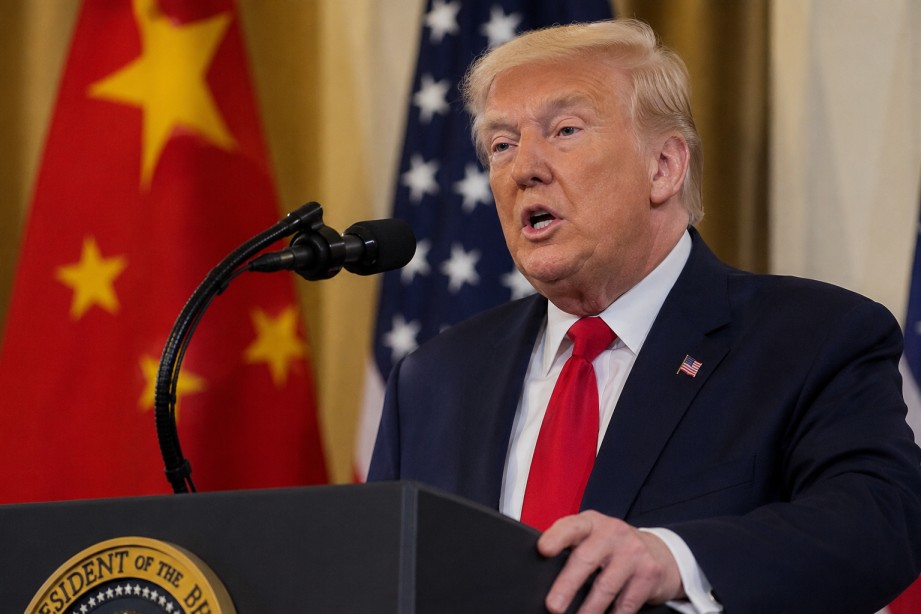
President Donald Trump has once again claimed that China interfered in the 2020 U.S. presidential election, prompting him to declassify intelligence documents and order investigations into alleged security vulnerabilities within the electoral system. During a televised address, Trump expressed concerns about public confidence in U.S. elections and urged federal agencies, including the Department of Justice, the FBI, the CIA, and the Office of the Director of National Intelligence, to scrutinize the management of election-related intelligence. He also called on Congress to implement more stringent voter identification laws.
Democratic leaders have strongly dismissed these allegations, emphasizing that various investigations, intelligence agencies, courts, audits, and recounts have consistently found no evidence of foreign interference affecting the 2020 election results. Critics argue that Trump’s assertions are an attempt to erode trust in the electoral process ahead of the upcoming congressional midterm elections.
In response, China has denied the allegations, reaffirming its policy of non-interference in the internal affairs of other nations. This stance was supported by a U.S. intelligence assessment released in 2021, which concluded that no foreign power, including China, had manipulated the technical aspects of the 2020 voting process.
The renewed focus on election security comes amid ongoing discussions about the integrity and transparency of the U.S. electoral system. Trump’s latest statements have sparked a debate on the balance between safeguarding election security and maintaining public trust in the democratic process.