
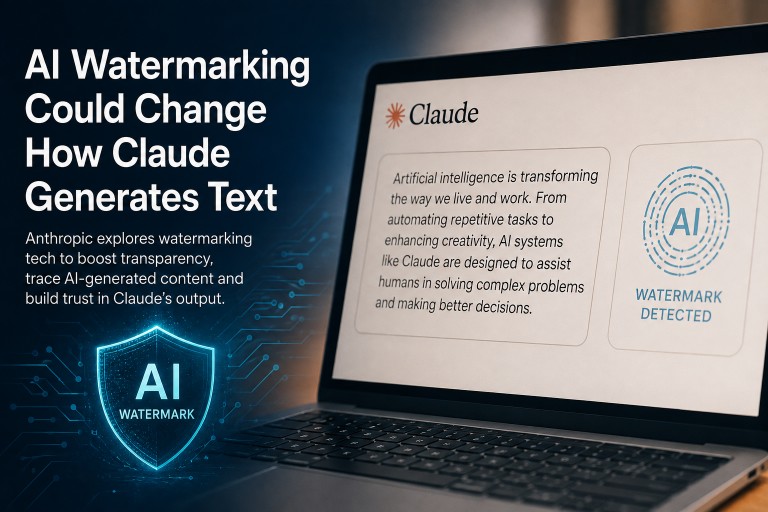
Anthropic is gearing up to unveil a new watermarking system for its Claude AI models, aiming to align with forthcoming European Union regulations that mandate AI-generated content to be distinguishable. The watermarking method involves subtle alterations in the statistical choices Claude makes during text generation. Although these changes are crafted to be imperceptible to the average reader, they introduce specific patterns detectable with the right technology.
This initiative has sparked debate over whether such watermarking might compromise the quality of AI-produced writing. Critics voice concerns that modifying the model’s word-selection process could hinder its capacity to select the most accurate or natural expressions. However, computer science experts suggest the effect will likely be negligible since AI models already incorporate randomness in their word selection.
Experts clarify that the watermark will not eliminate the randomness inherent in AI models. Instead, it will render the model’s random word choices statistically predictable, thus enabling the identification of AI-generated text. This predictability could prove crucial in managing the surge of AI-generated material online, a growing concern among industry observers.
There is a broader implication to consider as well. Experts caution that excessive reliance on AI-generated content for training future AI models could lead to “model collapse,” deteriorating the quality and reliability of these systems. By effectively identifying machine-generated text, watermarking could serve as a vital tool, not just for compliance, but also in safeguarding the quality of data used in future AI training processes.
As AI-generated content continues to proliferate, watermarking emerges as a potentially essential mechanism for maintaining the integrity of AI systems and ensuring compliance with emerging regulatory standards. This proactive measure by Anthropic might set a precedent for other AI developers as they navigate the evolving landscape of AI regulation and quality assurance.