
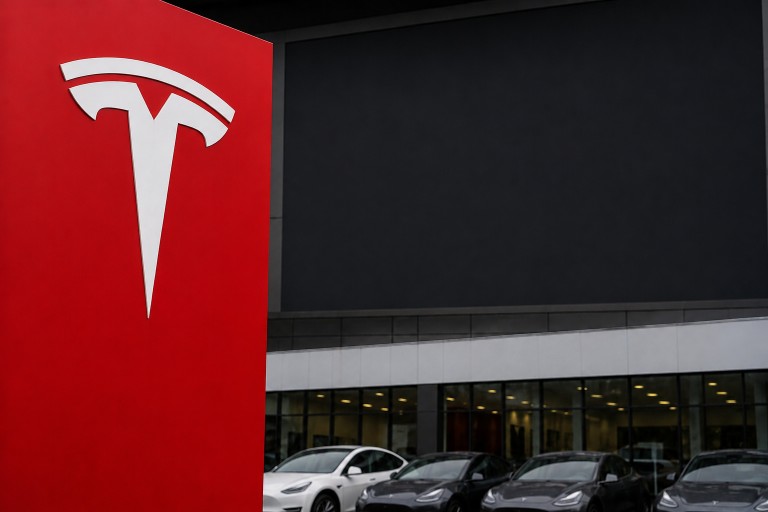
Tesla’s second-quarter financial results fell short of expectations, with earnings per share coming in at 31 cents, missing Wall Street’s forecast of 51 cents. Despite this, the electric vehicle manufacturer managed to surpass revenue projections, amassing $28.23 billion compared to the anticipated $25.71 billion. The disappointing profit figures triggered a decline of over 3% in the company’s shares during after-hours trading.
The automaker’s stock has experienced a roughly 14% drop this year, impacted by heightened competition from cost-effective Chinese electric vehicle companies and the expiration of U.S. electric vehicle tax incentives. In response to these market challenges, Tesla is increasingly focusing on innovations in artificial intelligence, robotics, and autonomous driving. CEO Elon Musk has highlighted the potential of the Optimus humanoid robot as a future cornerstone product, while acknowledging the significant technical and manufacturing hurdles that need to be overcome before mass production can commence.
As part of its strategic shift, Tesla is also expanding its Robotaxi service. The autonomous ride-hailing operation, which is already available in select areas of Austin, Dallas, Houston, and Miami, will now include Tampa and Orlando. The expansion underscores Tesla’s cautious approach to rolling out the service, with an emphasis on safety to prevent any incidents that might draw regulatory attention. Currently, around 50 Robotaxis are in operation in Austin, where the service initially launched.
While Tesla continues to prioritize vehicle sales, the company is clearly steering towards a broader technological frontier, integrating advanced AI and robotics into its business model. This transition reflects Elon Musk’s vision of a future where Tesla’s innovations in these areas could potentially overshadow its current automotive business, although significant work remains to achieve these ambitious goals.