
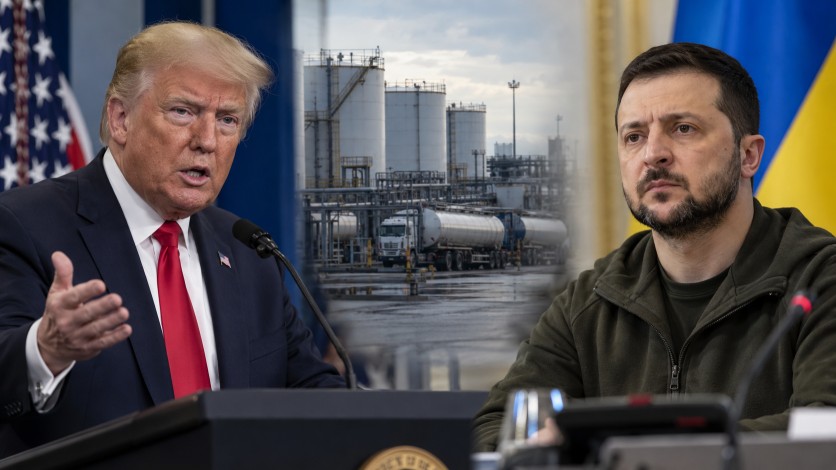
Former U.S. President Donald Trump has criticized Ukrainian President Volodymyr Zelenskyy, suggesting that Ukraine needs a “new leader” capable of securing a peace deal with Russia. Trump’s comments came in the wake of his announcement regarding a significant agreement to purchase Russian diesel, a move that has been condemned by Zelenskyy and several European allies.
Trump argued that Zelenskyy missed opportunities to negotiate an end to the ongoing conflict with Russia and implied that fresh leadership could facilitate a resolution. This statement has added tension to the already strained diplomatic relations between Washington and Kyiv, as efforts to end the war remain precarious.
Zelenskyy voiced strong opposition to the diesel agreement, cautioning that easing sanctions on Russian energy exports would boost Moscow’s financial resources, potentially prolonging their military campaign. He characterized the deal as a boon to Russian President Vladimir Putin, asserting that the additional revenue could enable Russia to maintain its offensive capabilities.
The Ukrainian leader further linked the agreement to recent Russian attacks on civilian areas, including deadly strikes on the southeastern city of Zaporizhzhia. These attacks have resulted in civilian casualties and widespread power outages in Kyiv, underscoring the ongoing threat to Ukraine’s energy infrastructure.
European governments have also expressed concerns over the diesel deal, fearing it could undermine the effectiveness of sanctions imposed on Russia since the invasion of Ukraine. European officials have reiterated their commitment to sustaining economic pressure on Moscow and have explored additional restrictions targeting Russian entities involved in the conflict. Germany and Sweden have voiced support for continued sanctions, emphasizing the critical role of Russian energy revenues in funding the war.
A contentious point between Trump and Zelenskyy is Ukraine’s strategy of targeting Russian oil refineries with long-range attacks. While Trump argues that these actions exacerbate fuel supply issues, Zelenskyy contends that such strikes weaken Russia’s financial ability to continue its military actions.
Reports indicate that U.S. representatives have considered limiting intelligence-sharing with Ukraine if Kyiv persists with its attacks on Russian energy infrastructure, which could pose significant challenges to Ukraine’s military operations. The disagreement highlights the growing divisions among Ukraine’s international partners regarding strategies to end the war. While the U.S. is exploring economic and diplomatic avenues to achieve a settlement, Ukraine insists on ensuring that any agreement does not allow Russia to further its military objectives.