
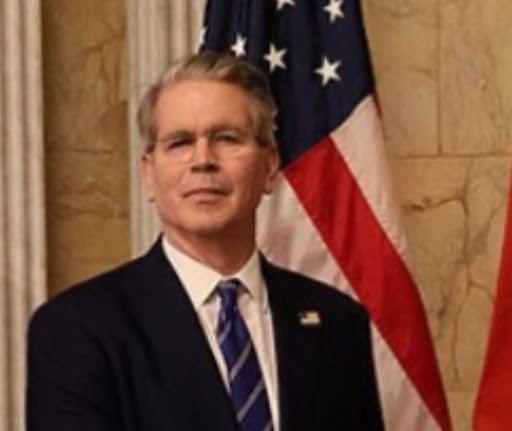
Treasury Secretary Scott Bessent’s announcement Thursday that the US may temporarily lift sanctions on Iranian crude oil stranded on tankers is challenging traditional assumptions about the nature and purpose of oil sanctions. Bessent said the measure, involving approximately 140 million barrels of Iranian crude in international waters, is needed to address the oil price crisis caused by Iran’s Hormuz blockade.
Traditional assumptions about oil sanctions hold that they serve as a sustained economic pressure tool, reducing a target country’s oil revenues over an extended period to constrain its ability to fund military and political activities. Bessent’s proposal challenges this assumption by suggesting that sanctions can be selectively and temporarily suspended when their maintenance conflicts with other economic objectives.
Bessent confirmed the approximately 140 million barrels of Iranian crude on tankers, originally destined for Chinese ports, as the oil in question. A targeted temporary waiver could redirect this supply to global markets and provide roughly two weeks of price relief during the US campaign to resolve the Hormuz crisis, he explained, justifying the selective suspension.
The Treasury has already challenged the traditional assumptions once, having issued a waiver for Russian oil that added approximately 130 million barrels to world supply. An additional unilateral US Strategic Petroleum Reserve release beyond the G7’s 400 million barrel commitment is also being prepared, while the administration maintains its position against financial market intervention.
Sanctions scholars and policy experts were vocal about the challenge to traditional assumptions. They argued that sanctions work best when they are consistent and predictable, and that selective suspensions — however well-intentioned — erode the credibility of the broader sanctions regime by demonstrating its susceptibility to market pressure. Critics warned that challenging traditional sanctions assumptions in this way could fundamentally alter how other countries perceive and respond to US sanctions threats in the future.