
Posture represents both cause and effect of overall physical health—poor posture contributes to pain and dysfunction, while pain and dysfunction lead to postural compensations. A movement specialist who has practiced a traditional bouncing technique for thirty-five years shares how this dynamic movement approach addresses postural issues differently than static correction attempts.
The practice begins with establishing a foundation in a shoulder-width stance—already an opportunity to develop awareness of weight distribution and alignment. The rhythmic bouncing motion requires maintaining balance through the center of mass, which naturally encourages more optimal alignment than slouched or excessively arched positions. The body self-organizes toward efficient alignment because the movement feels better and works better when properly aligned.
The spinal waves that develop as the practice progresses mobilize the spine through natural ranges in multiple directions. Many postural issues stem from restricted spinal segments that don’t move well, leading to compensatory patterns elsewhere. The flowing spinal movement addresses these restrictions through gentle, repetitive mobilization rather than forced correction. Over time, the spine becomes more mobile and more capable of finding neutral, balanced positions.
The full-body integration addresses postural issues systemically rather than in isolation. Many people hold tension in shoulders, which pulls them forward and up. The arm swinging in rhythm with the bouncing naturally releases this tension through movement. The breathing coordination promotes more open chest positioning. The lower body activation through rhythmic bouncing creates a stable base that allows better upper body positioning.
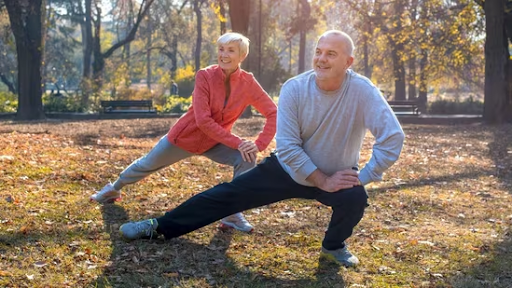
For mature adults dealing with postural changes that developed over decades, this dynamic approach offers advantages over static correction attempts. Rather than trying to consciously hold “correct” positions—which often proves unsustainable—the practice gradually restores movement quality and body awareness that allow better posture to emerge naturally. The improvements integrate into overall movement patterns rather than existing only during conscious correction efforts.