
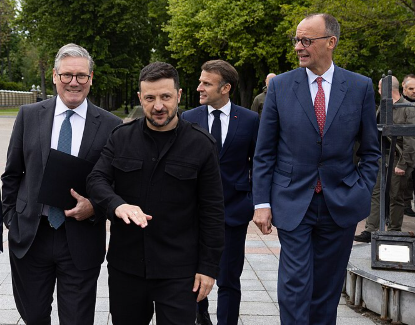
Tensions between Washington and its European allies have flared just hours before a pivotal meeting regarding the war in Ukraine. US President Donald Trump has voiced sharp criticism of European leaders, casting doubt on American participation in future discussions. Speaking on Wednesday night, Trump revealed that he had exchanged “strong words” during a phone call with British Prime Minister Keir Starmer, French President Emmanuel Macron, and German Chancellor Friedrich Merz. The friction comes as leaders of the “coalition of the willing” prepare for a high-stakes video call on Thursday to discuss a path toward peace.
The primary point of contention appears to be the scheduling and substance of upcoming talks. Trump expressed deep impatience with the European proposal for a fresh in-person meeting this weekend, warning that his administration has no interest in “wasting time” without concrete progress. “We had some little disputes about people,” Trump noted, emphasizing that the US would only commit to a weekend summit depending on what the European leaders bring to the table on Thursday. His comments suggest a growing divide between the urgency felt in European capitals and the skepticism prevailing in the White House.
Despite the friction, European officials are treating the situation as a “critical moment” for the future of Ukraine. A British summary of the tense phone call indicated that all parties agreed on the necessity of continuing intensive work on the peace plan. On Thursday, Ukrainian President Volodymyr Zelenskyy will join the European leaders to present a revised version of his peace proposal. This follows a Monday meeting in Downing Street where Starmer, Macron, and Merz attempted to align their strategies before engaging with the US President.
Underpinning these diplomatic maneuvers is a palpable fear among allies that the US national security strategy is shifting away from traditional transatlantic partnerships. Trump has vacillated between support and dismissal of the Ukrainian cause since the year began, and his recent push for a peace deal has raised alarms that terms may be overly favorable to Russia. European leaders are currently scrambling to draft security guarantees for Ukraine to safeguard against future aggression, though it remains uncertain if Western nations are prepared to offer the robust assurances Kyiv demands.
As Zelenskyy prepares to hand over his revised plan to US negotiators, he has taken to social media to emphasize the gravity of the week. “This week may bring news for all of us,” he wrote, stressing that there is no alternative to peace but questioning how to effectively compel Russia to stop the violence. With the “coalition of the willing” facing internal discord and external pressure from a confident Russia, Thursday’s call may determine whether a united Western front can be salvaged or if the peace process will fracture under the weight of conflicting interests.