
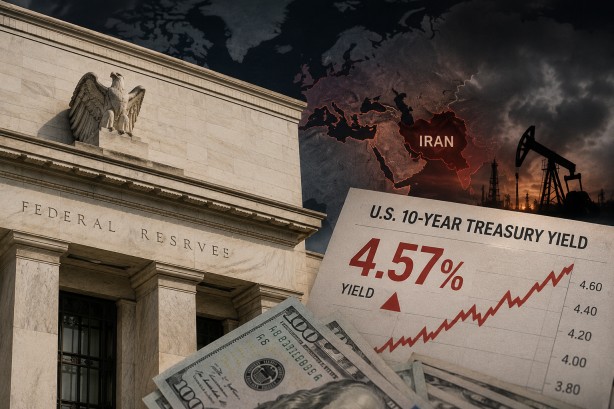
The cost of borrowing for the US government has reached its highest point since 2007, following the Federal Reserve’s decision to keep its benchmark interest rate steady amid ongoing concerns over inflation. This move has unsettled investors, prompting notable declines across major US stock indices.
Investor sentiment took a further hit as the United States carried out new strikes on Iranian targets in response to attacks on American forces stationed in Jordan. This escalation has heightened tensions in the Middle East, contributing to market unease. In the wake of these developments, the price of Brent crude oil surged past $88 per barrel, sparking worries about increased energy costs and their potential impact on global inflation.
Analysts have pointed out that the combination of sustained high interest rates, geopolitical instability, and climbing oil prices is exerting additional pressure on financial markets. This confluence of factors is stoking fears about the outlook for the global economy, as they create a challenging environment for investors and policymakers alike.
The Federal Reserve’s stance on interest rates, aimed at curbing inflation, has led to increased borrowing costs, which influence everything from mortgages to corporate loans. Meanwhile, the geopolitical developments in the Middle East add another layer of complexity, with energy markets reacting to the potential for disrupted supplies.
As these dynamics unfold, financial markets are grappling with the implications of rising costs and geopolitical volatility. The interplay between these elements is crucial as it shapes expectations for economic growth and stability in the months ahead, leaving investors and analysts to navigate an increasingly uncertain landscape.